
Paragliding, explained from the ground up.
A wing overhead, the landscape below. Learn what makes a paraglider fly, why the weather matters, and how different places change the experience.
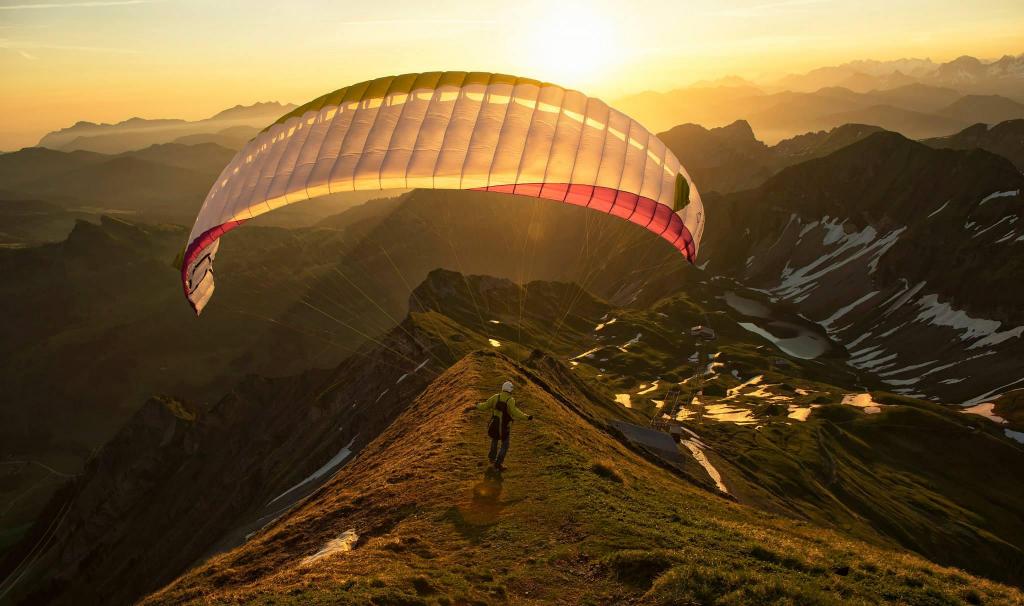
What is paragliding?
Paragliding is unpowered flight using a flexible fabric wing, with the pilot suspended beneath it in a harness.
As the wing moves through the air, it generates lift. In still air, a paraglider glides forward and gradually descends. Rising air can extend the flight, sometimes considerably.
A flight begins with suitable conditions, a suitable launch and a plan for landing. What happens between takeoff and landing depends on the air, the terrain and the decisions made by the pilot.
Could paragliding be for you?
People are drawn to paragliding for different reasons. Some want to see a familiar landscape from above. Others are curious about the feeling of flight, or interested in learning to fly independently.
A tandem flight offers an introduction with a qualified pilot in control. You don’t need previous flying experience, but the conditions, your individual circumstances and the requirements of the flight all matter.
Feeling uncertain about heights or flying is worth discussing rather than ignoring. A good first experience begins with clear information and a realistic understanding of what is involved.
Why the weather matters
A clear sky doesn’t automatically make it a good day to fly.
Wind direction and strength, turbulence, visibility, changing clouds, terrain and landing options can all affect whether a flight is possible.
Conditions can change throughout the day. Sometimes flying means waiting for a better window. Sometimes it means choosing another site or deciding not to fly.
The equipment behind the flight
The wing is the most visible part of a paraglider, but it is only one part of the equipment system.
A harness supports the pilot. A reserve parachute forms part of the emergency equipment. Helmets, instruments and other equipment have their own roles, depending on the type of flying.
For a first-time passenger, the important questions concern equipment suitability, the pilot’s qualifications and the way the flight is managed. For someone learning to fly, equipment knowledge becomes part of a much longer training process.
Different places, different kinds of flying
Paragliding takes place above mountains, coastal ridges, valleys and open landscapes. The scenery may attract attention first, but geography and weather help define the character of each place.
- France — Annecy and the Alps. Lakes, mountain terrain and an established European flying culture.
- India — Bir Billing. Himalayan foothills and a mountain-flying environment that attracts visiting pilots.
- Nepal — Pokhara. Lake and ridge landscapes with a distinctive Himalayan backdrop.
- Turkey — Ölüdeniz and Babadağ. A mountain-to-sea setting closely associated with scenic paragliding.
- Montenegro — the Adriatic coast and mountains. Coastal ridges, mountain landscapes and several flying environments within a compact country.
These places are not interchangeable. Conditions, access, experience requirements and available local support vary.
Explore paragliding destinations
From a first flight to learning
A tandem flight and learning to fly are two different experiences.
In tandem paragliding, a qualified pilot handles the flight while the passenger experiences being in the air. Learning to fly means structured instruction, ground handling, supervised practice, weather knowledge and the gradual development of judgement.
A first flight may inspire someone to learn. It does not replace training.
This is an editorial guide to paragliding, not a flight booking service or a substitute for qualified instruction and current local flying guidance.
Common questions
Do I need experience for a tandem flight?
Usually not. A qualified tandem pilot manages the flight. Individual suitability, the local requirements and the conditions on the day still matter.
Can people paraglide without mountains?
Yes. Many flights begin from hills or mountains, but suitable tow systems also allow pilots to launch from flatter terrain.
Can you paraglide in any season?
Paragliding happens in different seasons around the world. Whether a particular day is flyable depends on the site, conditions, equipment and pilot.
Is paragliding risk-free?
No. Paragliding involves real risks. Qualified instruction, suitable equipment, sound judgement and a willingness to cancel when conditions are wrong all matter.
Does a tandem flight teach me to fly?
No. It can introduce you to paragliding, but independent flying requires structured instruction, supervised practice and further training.