
Montenegro's sparkling Adriatic coast finds its most vibrant expression in Budva, a lively seaside town that has grown into the country's premier tourism hub. From its medieval old town to its long ribbon of beaches and offshore islands, Budva offers visitors the classic Mediterranean combination of sun, sea, and storybook scenery.
Budva and its 17 beaches
Budva stretches along a jagged coastline where 17 distinct beaches line the broader Budva Riviera, creating an almost uninterrupted playground of sand, pebbles, and coves. Rugged cliffs and pine-covered hills frame many, so simply walking the shore becomes a continuous sequence of viewpoints, each revealing a slightly different angle on the same glittering sea.
The town's local beaches, from the long curve of Slovenska Plaža to the more intimate Mogren, offer everything from relaxed family-friendly zones to livelier stretches dotted with cafés and bars. In summer, the water warms to inviting temperatures, and the light-coloured sand and pebbles contribute to the turquoise shimmer that draws travellers from across Europe.
Discovering the Riviera by boat
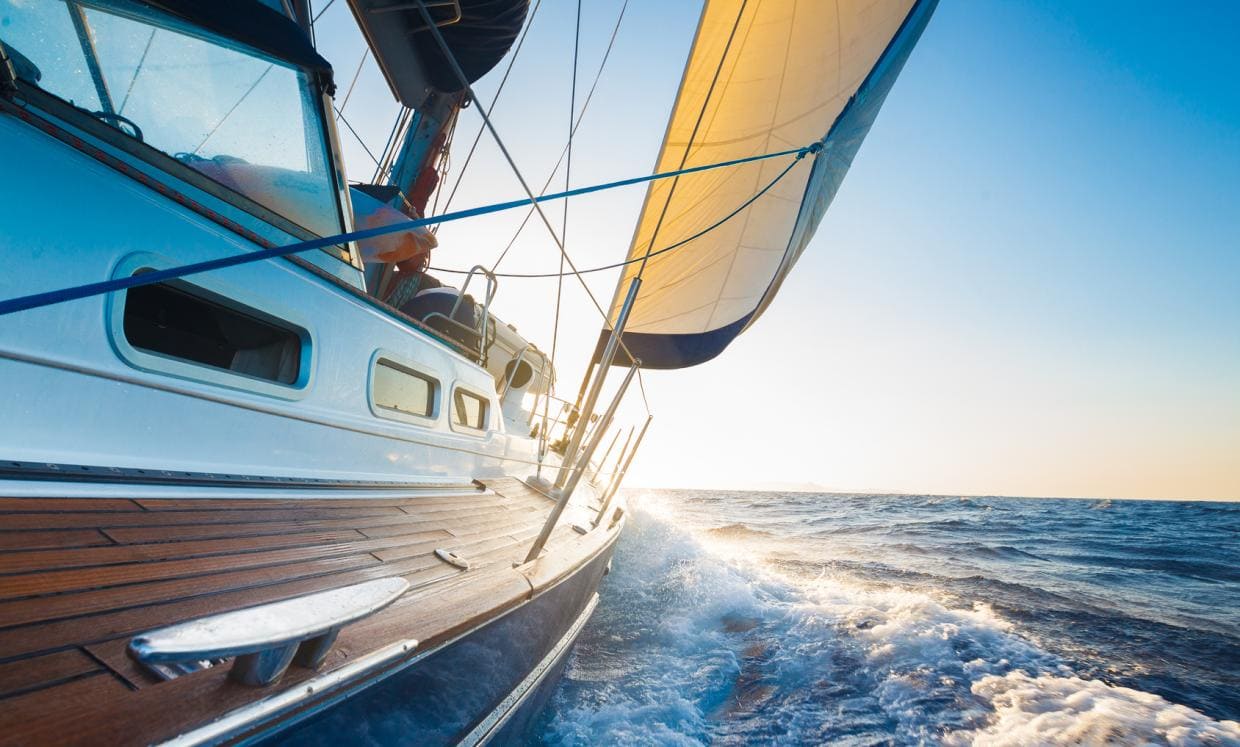
Experiencing Budva from the land is only half the story; the rest unfolds once you step onto a small boat and slip out over the open water. From the deck, the coastline rearranges itself into sweeping panoramas, and familiar promenades transform into dramatic terraces perched above the sea, often revealing coves and rock formations that go unnoticed from the shore.
A typical private excursion for up to eight people costs around 55 euros and lasts anywhere from three to eight hours, giving ample time to drift, swim, and pause at particular viewpoints. The fresh sea breeze, the sense of space as the town recedes behind you, and the warmth of the sun on open water combine into an atmosphere that many visitors describe as one of pure freedom and relaxation.
Islands: St. Nicholas, St. Stephen, Katic, Holy Week
Soon after leaving Budva's marina, the boat glides past the green slopes and rocky edges of St. Nicholas Island, often called "Hawaii" for its clear water and small sandy bays. From the sea, its beaches, cliffs, and tiny church appear in a single sweeping view, while the town of Budva lines up in the background, making this one of the most photogenic scenes on the Riviera.
Farther along the coast, the famous islet of St. Stephen rises from the water as a compact cluster of stone houses, linked to the mainland by a narrow causeway and surrounded by pale, elegant beaches. Continuing south by boat toward Petrovac, the little islands of Katic and Holy Week appear, the latter crowned by a small church said to have been built by a fisherman who survived a shipwreck and dedicated the rest of his life to gratitude.
Northern route: Jaz, Ploce, Trsteno, Mogren
If you choose the opposite direction, the boat traces the entire arc of the Budva Riviera toward the west, passing beneath the cliffs and green hills above Mogren Beach, whose golden sand and clear water sit in a sheltered inlet. Seen from the sea, the path that connects Mogren's two sections and the rock formations around it form a rugged amphitheatre opening onto the open Adriatic.
Beyond Budva, wide Jaz Beach appears as a long, curving band of shore—one of Montenegro's most extensive beaches and a well-known setting for summer concerts and festivals. Continuing farther, the coast breaks into smaller coves such as Ploce and Trsteno, where terraces and rocks create natural swimming platforms and viewpoints, making them appealing stops for a swim from the boat.
Blue Cave, Mamula, and swimming stops
Longer excursions sometimes extend all the way toward the famed Blue Cave, where sunlight filters through an underwater opening to bathe the interior in shifting shades of cobalt and turquoise. Nearby, the island of Mamula, with its circular 19th‑century fortress, rises starkly from the sea and serves as a haunting counterpoint to the Riviera's softer beaches and bays.
On these journeys, the captain will generally anchor in calm, clear water so passengers can swim directly off the boat, floating above the Adriatic's transparent depths with the mountains and islands forming a vast natural amphitheatre around them. Between the pauses for swimming, the glide past beaches, and the slow circling of islands, a boat trip from Budva becomes less a single outing and more a continuous sequence of shifting horizons—each one framing Montenegro's coast in a new and unforgettable way.